
Product Composition and Standardization
Product Profile
Dabur Chyawanprash
Dabur Chyawanprash is a proprietary Ayurvedic polyherbal formulation presented as an Awaleha (Avaleha), a semisolid oral dosage form traditionally prepared by combining herbal ingredients with a suitable base and processed according to Ayurvedic principles. Amla (Phyllanthus emblica L.) is a principal botanical ingredient, complemented by a range of other traditionally used Ayurvedic herbs, spices, and natural ingredients.
The formulation integrates multiple botanical ingredients selected on the basis of their established Ayurvedic properties and traditional applications. Its composition reflects the broader Rasayana concept and is traditionally associated with supporting general health, vitality, strength, and physiological resilience.
Dabur Chyawanprash is manufactured as a ready-to-use semisolid preparation for oral administration and is consumed according to the recommended directions for use. Its traditional rationale is derived from the Ayurvedic properties and historical use of its constituent ingredients, while its contemporary positioning can be further substantiated through phytochemical characterization, preclinical investigations, clinical studies, and published scientific evidence.
The combination of a diverse botanical matrix, traditional Ayurvedic processing, and modern scientific characterization provides a framework for understanding Chyawanprash as a complex, multi-component herbal formulation rather than a single-ingredient intervention.
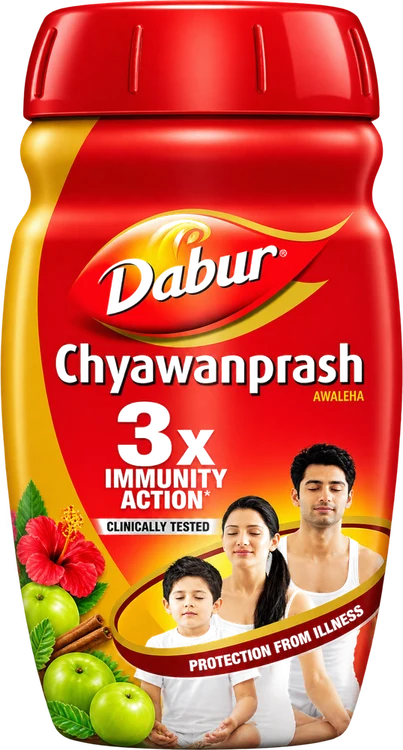
Awalehasemi-solid herbal paste for oral administration
AmlaPhyllanthus emblica
Approximately 45Ayurvedic ingredients
Dosage Forms
Dabur Chyawanprash is available as a semi-solid herbal paste (avaleha) intended for oral administration.
250 g jar, 500 g jar, 1 kg jar, 2 kg family pack
1–2 teaspoons, approximately 12–24 g daily
½–1 teaspoon daily
It may be consumed directly or with warm milk or water, preferably in the morning or as directed by a healthcare professional.
Product Variants
Dabur Chyawanprash/ Dabur Chyawanprash Awaleha
Classical formulation with ~45 Ayurvedic ingredients
General family useDabur Chyawanprash Sugar Free
Formulated without added sugar; suitable for individuals seeking reduced sugar intake
Adults requiring sugar-controlled alternativesDabur Chyawanprash Awaleha Gur
Dabur Chyawanprash with the goodness of gur
General family use; No refined sugar claimDabur Khajurprash
Primarily composed of high-quality dates, Khajurprash merges the inherent sweetness of dates with a diverse assortment of Ayurvedic herbs and spices.
General family useDabur Kesarprash
an Ayurvedic revitalizer with Kesar & Moti.
Unisex product for general wellbeingDabur Ratnaprash
Premium Chyawanprash enriched with Kesar, Moti and Musali
Unisex product for adultsChyawanshakti Gummies
Mango flavour gummies with the goodness of chyawanprash
For kids
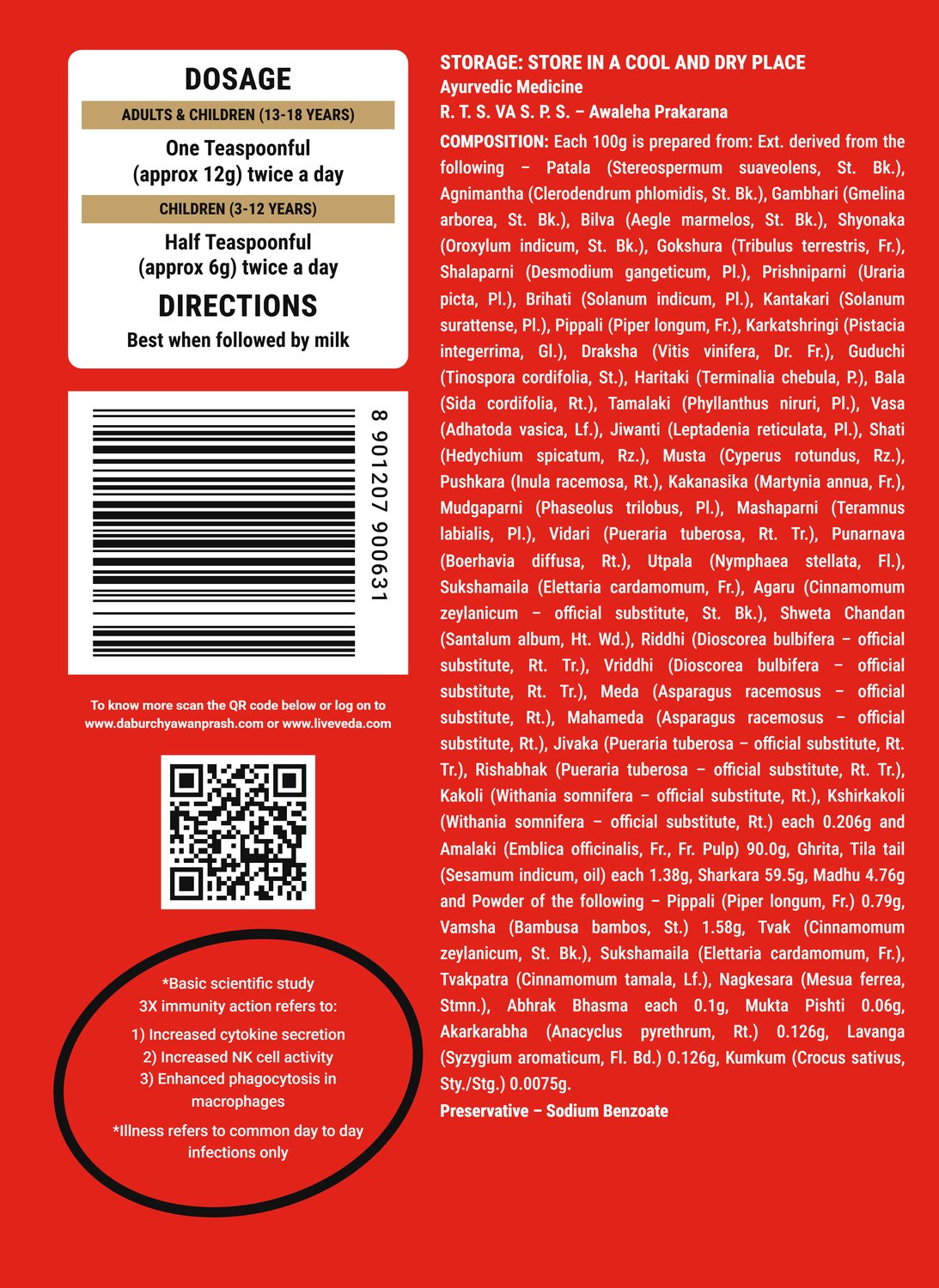
Declared Composition and Directions for Use
Each ingredient in the formulation, by category, with its scientific name and the part used. Search or filter to explore.
Amla
Emblica officinalis · Fruit
39 botanicals
Entries 2 to 40
Ghrita, Tila Taila
Ghee and sesame oil
11 ingredients
Entries 45 to 55
Formulation Composition
| # | Ingredient | Scientific name | Part used |
|---|---|---|---|
| Main Ingredient | |||
| 1 | Amla | Emblica officinalis | Fruit |
| Herbal Extract Base | |||
| 2 | Patala | Stereospermum suaveolens | Stem bark |
| 3 | Agnimantha | Clerodendrum phlomidis | Stem bark |
| 4 | Gambhari | Gmelina arborea | Stem bark |
| 5 | Bilva | Aegle marmelos | Stem bark |
| 6 | Shyonaka | Oroxylum indicum | Stem bark |
| 7 | Gokshura | Tribulus terrestris | Fruit |
| 8 | Shalaparni | Desmodium gangeticum | Whole plant |
| 9 | Prishniparni | Uraria picta | Whole plant |
| 10 | Brihati | Solanum indicum | Whole plant |
| 11 | Kantakari | Solanum surattense | Whole plant |
| 12 | Pippali | Piper longum | Fruit |
| 13 | Karkatashringi | Pistacia integerrima | Gall |
| 14 | Draksha | Vitis vinifera | Fruit |
| 15 | Guduchi | Tinospora cordifolia | Stem |
| 16 | Haritaki | Terminalia chebula | Fruit |
| 17 | Bala | Sida cordifolia | Whole plant |
| 18 | Tamalaki | Phyllanthus niruri | Whole plant |
| 19 | Vasa | Adhatoda vasica | Leaf |
| 20 | Jivanti | Leptadenia reticulata | Root |
| 21 | Shati | Hedychium spicatum | Rhizome |
| 22 | Musta | Cyperus rotundus | Root |
| 23 | Pushkara | Inula racemosa | Root |
| 24 | Kakanasika | Martynia annua | Fruit |
| 25 | Mudgaparni | Vigna trilobata | Whole plant |
| 26 | Mashaparni | Teramnus labialis | Whole plant |
| 27 | Vidari | Pueraria tuberosa | Root |
| 28 | Punarnava | Boerhavia diffusa | Whole plant |
| 29 | Utpala | Nymphaea stellata | Flower |
| 30 | Sukshamalla | Elettaria cardamomum | Fruit |
| 31 | Aguru | Cinnamomum zeylanicum* | Stem bark |
| 32 | Shweta Chandana | Santalum album | Heartwood |
| 33 | Riddhi | Dioscorea bulbifera* | Tuber |
| 34 | Vriddhi | Dioscorea bulbifera* | Tuber |
| 35 | Meda | Asparagus racemosus (official substitute) | Root |
| 36 | Mahameda | Asparagus racemosus (official substitute) | Root |
| 37 | Jivaka | Pueraria tuberosa* | Root tuber |
| 38 | Rishabhak | Pueraria tuberosa* | Root tuber |
| 39 | Kakoli | Withania somnifera* | Root |
| 40 | Kshirakakoli | Withania somnifera* | Root |
| Main Ingredient | |||
| 41 | Ghrita | - | Ghee |
| 42 | Tila Taila | Sesamum indicum | Oil |
| Sweetener | |||
| 43 | Sharkara | - | Sugar |
| 44 | Madhu | - | Madhu |
| Herbal Powder Mix | |||
| 45 | Pippali | Piper longum | Fruit |
| 46 | Vamsha | Bambusa bambos | Siliceous secretion |
| 47 | Tvak | Cinnamomum zeylanicum | Bark |
| 48 | Sukshamalla | Elettaria cardamomum | Fruit |
| 49 | Tvakpatra | Cinnamomum tamala | Leaf |
| 50 | Nagkesara | Mesua ferrea | Stamen |
| 51 | Abhrak Bhasma | - | Calx |
| 52 | Mukta Pishti | - | Calx |
| 53 | Akarakarabha | Anacyclus pyrethrum | Root |
| 54 | Lavanga | Syzygium aromaticum | Flower bud |
| 55 | Kumkum | Crocus sativus | Stigma |
| Preservative | |||
| 56 | Sodium Benzoate | - | - |
Entries marked * are shown as supplied.
Ingredients, Bioactive Constituents and Reported Therapeutic Properties
The main ingredients of DCP, along with their botanical identities, key active biomolecules and specific therapeutic roles, are detailed in the table below.
01Emblica officinalisImmunomodulatory, rejuvenative, neuroprotective, hepatoprotective, antioxidant, cardiotonic, enhance generalvitality, cognition and promotes longevity
Major active biomoleculeGallic acid, ellagic acid, 1-O-galloyl-beta-D-glucose, 3,6-di-O-galloylD-glucose, chebulinic acid, quercetin, chebulagic acid, corilagin, 1,6- di-O-galloyl beta-D-glucose, 3-Ethylgallic acid, and isostrictiniin
02Stereospermum suaveolensTonic, digestive, cardiotonic, anti-inflammatory, blood purifier, antianemic
Major active biomoleculeSterekunthal B, sterochenol A&B, lapachol, dehydro-a-lapachone, apigenin, scutellarein, sterolensin, dinatin, and dinatin-7-glucuroniside
03Clerodendrum phlomidisLaxative, antitussive, digestive
Major active biomoleculep-methoxy cinnamic acid, linalool, linoleic acid, β-sitosterol, luteolin, iridoid glycoside, premnine, ganiarine, ganikarine, premnazole, aphelandrine, betulin, caryophyllene, premnenol, premna spirodiene, and clerodendrin-A
04Gmelina arboreaPromotes virility, strength andlactation
Major active biomolecule(Z)-3-hexenol, 1-octen-3-ol, hexanol, heptacosane, pentacosane, 1-pentacosene, nonanal and (E)-2-decenal
05Aegle marmelosAntidiarrheal, gastroprotective, anti-ulcerative, radioprotective
Major active biomoleculeGallic acid, quercetin, and rutin
06Oroxylum indicumGeneral weakness,hepatoprotective, antimicrobial,nephroprotective, cardiotonic
Major active biomoleculeBaicalein, biochanin a, 8, 8’ bis-baicalein, chrysin, ellagic acid, 6–hydroxy luteolin, oroxylin a, oroxoloside methyl ester, β-sitosterol, scutellarein, ursolic acid, chrysin-7-ogentiobioside, baicalein-7-odiglucoside, scutellarein-7-o-glucopyranoside, aequinetin, chrysin-6-c-β-D-glucopyranosyl-8- c-α-larabinopyranoside, pinocembrin, pinobanksin, lupeol, 2α-hydroxyl lupeol, echinulin, adenosine, and dimethyl sulfone
07Tribulus terrestrisAphrodisiac, mood elevator,diuretic and cardiotonic
Major active biomoleculeTigogenin, neotigogenin, gitogenin, neogitogenin, hecogenin, neohecogenin, diosgenin, chlorogenin, ruscogenin, sarsasapogenin, protodioscin protogracillin, kaempferol, kaempferol-3-glucoside, kaempferol-3-rutinoside, tribuloside, quercetin 3-O-glycoside, quercetin3-O-rutinoside, and kaempferol 3-O-glycoside
08Desmodium gangeticumGeneral debility, fatigue,neuroprotective, cardiovascularand respiratory disorders
Major active biomoleculeN,N-dimethyltryptamine, Hypaphorine, hordenine, caudicine, Gangetin-3H, Gangetinin and desmodin
09Uraria pictaGeneral weakness, nervinetonic, cardiovascular disorders
Major active biomoleculemethylenedioxyisofla-vanone, and 4’, 5’-dihydroxy-2’, 3’-dimethoxy-7-(5-hydroxychromen-7yl)-isoflavan-one, isoflavanones, triterpenes and steroids
10Solanum indicumCardiotonic, astringent,carminative and digestive
Major active biomoleculeIndiosides A, B, C, D, F, Protodioscin, Carpesterol, Isoanguivine, Solanidine,Solasodine, Solamargine, Solavetivone, Solafuranone, Scopoletin, Solanum indicum Linn. N-p-trans-Coumaroyltyramine, N-Trans- Feruloyltyramine,7-Hydroxy-6,8-Dimethoxy-3 (40-Hydroxy-30- Methoxyphenyl)-Coumarin, Isofraxidin, Fraxetin, Indicumine A, B, C, D, F, Arteminorin, Cleosandrin, 4,4’-biisofraxidin, β-Sitosterol, Daucosterol, Diosgenin, Lanosterol, Trilinolein, Oleodilinolin, and Palmitodilinolin
11Solanum surattense (Solanum xanthocarpum Schrad. and Wendi)Mucolytic, expectorant,anti-allergic, bronchodilatorand relieves flu
Major active biomoleculeLupeol, oleanolic acid, ursolic acid, β-sitosterol, campesterol, ergosterol, withanolide B
12Piper longumAntitussive, stimulant,bronchodilator, tonic,bioavailability enhancer,carminative, relievesrespiratory infections andhepatitis
Major active biomoleculeCarboxylic acids and derivatives, cinnamic acids and derivatives, isoflavonoids, napthalenes, oxanes, phenanthrenes and derivatives, phenol ethers, phenylpropanoic acids, pteridines and derivatives, pyridines and derivatives and steroid and its derivatives
13Pistacia integerrimaBronchodilator, expectorant,carminative, antitussive,digestive, cholagogue
Major active biomoleculeβ-pinene, sabinene, α-pinene and limonene while terpinen-4-ol, α-terpinol, α-pinene, Pistacienoic acids, Hydroxydecanyl arachidate, Octadecan-9, 11-diol-7-one, β-Sitosterol, and Pisticialanstenoic acid
14Vitis viniferaNutritive, aphrodisiac,cardiotonic, diuretic,demulcent, laxative,hepatoprotective, cures thirstand asthma
Major active biomoleculeOleanolic and betulinic acids, stilbenoid, daucosterol, E-resveratrol, E-ε-viniferin, (-)-epicatechin, catechin, gallocatechin, 6-O-acyldaucosterols, Vitis vinifera Linn. 1,2-di-O-acyl-3-O-β-D-galactopyranosyl glycerols, gallic acid, p-coumaric, caffeic and ferulic acids, anthocyanidin-3-O-glucosides, malvidin-3-O-glucoside, peonidin-3-O-glucoside and cyanidin-3-O-glucoside
15Tinospora cordifoliaGeneral tonic, immunomodulator, cytoprotective, genoprotective, adaptogenic
Major active biomoleculeTinosporine, tinosporide, tinosporaside, cordifolide, cordifol, heptacosanol, clerodane furano diterpene, diterpenoid furano lactone, tinosporidine, columbin,b-sitosterol, Berberine, palmatine, tembertarine, magniflorine, choline and tinosporin
16Terminalia chebulaNeurotrophic, rejuvenative,carminative anthelmintic,nervine tonic, appetitestimulant
Major active biomoleculeChebulin, ellagic acid, 2,4-chebulyl-D-glucopyranose, arjunglucoside I, arjungenin, chebulinic acid, gallic acid, ethyl gallate, punicalagin, terflavin A, terchebin, luteolin and tannic acid
17Sida cordifoliaCardiotonic, aphrodisiac,strength/vitality promoter
Major active biomoleculeEphedrine, pseudoephedrine, sterculic, malvalic, coronaric acid, betaphenethylamine, hypaphorine, ecdysterone, indole alkaloids, palmitic, stearic and β–sitosterol
18Phyllanthus niruriAntioxidant, cholagogue,laxative, hepatoprotective,anticancer, antiviral
Major active biomoleculeRutin, quercetin, gallocatechin, nirurin, niruriflavone, quercetol, astragalin, quercitrin, limonene, p-Cymene, lupeol, ellagic acid, gallic acid, ellagitannin, hexahydroxyldiphenoyl moiety and methyl brevifolincarboxylate, phyllanthin, hypophyllanthin, niranthin, lintetralin, phyltetralin, nirtetralin, and isolintetralin
19Adhatoda vasicaAntiulcer, bronchodilator, expectorant, anti-allergic, cholagogue, cardiovascular and respiratory disorders
Major active biomoleculeVasicine, Vasicine acetate, vasicinone, vasicoline, 2-acetyl benzyl amine and adhatodin
20Leptadenia reticulataStimulant, restorative, nutrient, anticancer, aphrodisiac, improves vision, immunity and life expectancy
Major active biomoleculeα&βamyrin,ferulic acid, luteolin, diosmetin, rutin, β-sitosterol, stigmasterol, hentriacontanol, simiarenol, apigenin, reticulin, deniculatin, leptaculatin, lupanol 3-O diglucoside, leptidine 1, luteolin, and diosmetin
21Hedychium spicatumAnti-inflammatory, antipyretic properties, hepatoprotection
Major active biomoleculehedychinone, yunnacoronarin A and D, hedychilactone B and C, spicatanol methyl ether, and coronarin-E, quercetin, chrysin, tectochrysin, and ethyl-trans-p-methoxy cinnamate
22Cyperus rotundusStimulant, hepatoprotective, stomachic, diuretic, antispasmodic, carminative, emmenagogue, anti-inflammatory, antirheumatic
Major active biomoleculeAmentoflavone, ginkgetin, isoginkgetin, sciadopitysin, Cyperene, Humulen and Selinene, Zierone, Campholenic Aldehyde, Pinene, Longiverbenone, Vatirenene, Copaene, Limonene, Terpineol, Azulene, Selinene, Myrtenol, Calacorene, Fokienol, Isogermacrene D, and Isolongifolene
23Inula racemosaAntihistaminic, bronchodilator,cures cough, cold, asthma andflank pain
Major active biomoleculeEudesmanolide, elemanolide, germacranolide, sesquicaranolide, guainolide, humulane, and heptadeca-1,8,11,14-tetraene
24Martynia annuaHepatotonic, cholagogue,laxative, anorexia, indigestion,constipation
Major active biomoleculePelargonidin-3-5-diglucoside, cyanidin-3 galactoside, p-hydroxy benzoic acid, gentisic acid, arachidic acid, linoleic acid, palmitic acid, stearic acid, apigenin, apigenin-7-o-glucuronide
25Phaseolus trilobusTonic, aphrodisiac, mildsedative, antioxidant, promotestrength, improves semen andsperm quantity
Major active biomoleculeα- pinene, carvone, pulegone, dalbergioidin, kievitone, phaseollidin,flavonoid glycosides viz quercetin, kaempferol, vitexin, and isovitexin
26Teramnus labialisImproves vigor and virility, aphrodisiac, relieves debility and fatigue
Major active biomoleculeVitexin, bergenin, daidzin and 3-O-methyl-D-chiro–inositol
27Pueraria tuberosaAdaptogenic support, Hormonal balance,Immunomodulator, Support bone health, Cardiovascular protection
Major active biomoleculePuerarin, Daidzein, Genistein, Tuberosin
28Boerhavia diffusaAntiaging, antioxidant, antipyretic, diuretic, anti-inflammatory, hematinic
Major active biomoleculeFlavonoids, alkaloids, glycosides, rotenoids, steroids, and triterpenoids
29Nymphaea stellataAnti inflammatory activity, antidiabetic activity
Major active biomoleculeNymphayol, Astragalin, corilagin, gallic acid, gallic acid methyl ester, isokaempferide, kaempferol, quercetin-3-methyl ether, quercetin, 2,3,4,6-tetra-o-galloyl dextroglucose, and 3-o-methylquercetin-3’-o-beta dextroxylopyranoside
30Elettaria cardamomumStimulant, stomachic, tonic, appetizer, useful in nausea, heartburn and intestinal spasms
Major active biomolecule1,8-cineole, α-terpinyl acetate, sabinene, 4-terpinen-4-ol, and myrcene
31Aquilaria agallochaAllergic, cholagogue, cardiovascular and
Major active biomoleculeasicoline, 2-acetyl benzyl amine and adhatodine Kusunol, jinkohol, 10-epi-γ-eudesmol,vanillic acid, aquilarone derivatives and phenylethyl chromones
32Santalum albumAntioxidant, antimicrobial, hepatoprotective,
Major active biomoleculeα-santalol and β-santalol, α-Santalene, vitexin, isovitexin, orientin, isoorientin, and isorhamnetin, menynic acid, stearolic acid, and oleic acid
33Dioscorea bulbiferaAntioxidant, anti-inflammatory, antimicrobial, antidiabetic, and neuroprotective effects
Major active biomoleculeDiosgenin, Dioscin,Allantoin, Diosbulbin B, Dioscorin, Myricetin, Quercetin
34Asparagus racemosusAphrodisiac, nutritive,galactogogue, tonic, antiulcer,antioxidant, good for eyes
Major active biomoleculeShatavarinI to VI, oligospirostanoside, aspargamine A, dihydrophenantherene, racemofuran, quercitin, rutin, hyperoside, sitosterol, 4, 6- dihydroxy-2-O (-2-hydroxyisobutyl) benzaldehyde, undecanyl cetanoate, sarsapogenin, γ-linoleinic acids, diosgenin, and quercetin 3-glucuronides
35Withania somnifera DunalAphrodisiac, adaptogenic,antioxidant, cytoprotective,neuroprotective, nootropic,antistress, promotes strength
Major active biomoleculeCuscohygrine, anahygrine, tropine, pseudotropine, anaferine, isopelletierine, withananine, withananinine, pseudo-withanine, somnine, somniferine, somniferinine, withanine, withasomnine, visamine, chlorogenic acid, and withaferin A
36GhritaNutritive, antioxidant,strengthens the immunity,anticancer, improves overallphysical and mental strength
Major active biomoleculeMonounsaturated fats, conjugated linoleic acid, antioxidants, vitamins A, E, D, K, and beta carotene
37Sesamum indicumNutritive, demulcent,aphrodisiac, antioxidant,woundhealing, radioprotective,anti-inflammatory
Major active biomolecule(+)-samin, (-)-asarinin, sesamol, (+)-sesamolin, (+)-sesamin, (+)- (7S,80R,8R)-acuminatolide, (-)-piperitol, and (+)-pinoresinol
38SharkaraSweetener, providescalories/energy
Major active biomoleculeDisaccharides (sucrose)
39MadhuAnti-infective,immunomodulator, woundhealing, antioxidant, antiaging,relieves cough and cold,antiseptic, sore throat, antiulcer
Major active biomoleculePhenolics (e.g., gallic, syringic, benzoic, transcinnamic, protocatechuic, p-coumaric, caffeic acids), Flavonoids (e.g., catechin, kaempferol, naringenin, luteolin, pinostrobin, apigenin), fructose, oligosaccharides (palatinose, isomaltose and alpha-cyclodextrin), carotenoids, cholines, kynurenic acid, enzymes (glucose oxidase, diastase, invertase, phosphatase, catalase peroxidase), vitamins (B1, B2, B3, B5, B6, B9, C, phylloquinone), minerals/trace elements (Na, Ca, K, Fe, Mg, P, Zn, Cu, Cr, Mn, S, B, Se, Mo, Co, F, I, Si)
40Bambusa bambosStimulant, astringent, antiulcer,emmenagogue, aphrodisiac
Major active biomoleculeOxalic acid, resins, waxes, benzoic acid, taxiphyllin, diferuloyl arabinoxylanhexasaccharide and oligosaccharide
41Cinnamomum zeylanicumHematinic, gastroprotective, antinociceptive, digestive, appetizer, hepatoprotective Stimulant, astringent, antiulcer, emmenagogue,
Major active biomoleculeα-bergamotene, α-copaene, α- humulene, δ-cadinene, tetradecanol and viridiflorene, Linalool, eugenol, β–caryophyllene, (E)-cinnamaldehyde, α-terpineol, (E)-cinnamyl acetate, (E)- caryophyllene, caryophyllene oxide, α– cadinol, tetradecanal and globulol, Oxalic acid, resins, waxes, benzoic acid, taxiphyllin, diferuloyl, arabinoxylanhexasaccharide and oligosaccharide
42Cinnamomum tamalaStimulant, antiulcer, antimicrobial, antidepressant, anticancer, digestive, hepatoprotective
Major active biomoleculeEssential oil, camphor, linalool, p-cymene, o-cymene, and 1,8-cineole, Jeolikote, (E)-cinnamaldehyde, (E)-cinnamyl acetate, cinnamaldehyde, 1,8-cineol, and eugenol
43Mesua ferreaAntitoxic, cardiotonic,carminative, digestive, relievesurinary tract disorders, goutand swelling
Major active biomoleculeMesuaferrin A, mesuaferrin B, mesuaferrin C, caloxanthone C, macluraxanthone, 1,5-dihydroxyxanthone and tovopyrifolin C
44Abhrak BhasmaGeneral debility, aphrodisiac.cardiotonic, cellular regenerator,useful in digestive impairment,malabsorption syndrome,asthma and cough
Major active biomoleculeAyurvedic nanosized mineral preparation of incinerated biotite mica, Nature of compound: multimineral cocktail
45Mukta PishtiBalances Pitta dosha, enhances skin health, and supports heart and digestive health.
Major active biomoleculean ayurvedic mineral formulation made from rare, purified freshwater pearl paste infused in pure Rosewater, natural and purest source of Calcium
46Anacyclus pyrethrumEnhance vitality and mental alertness
Major active biomoleculeAliphatic glycosides, flavonoids, lignan glycosides, megastigmane derivatives, triterpenoids, steroids, fatty acids, alcohols, hydroxybenzoic acids
47Syzygium aromaticumAntiviral, antimicrobial, antifungal, antioxidant, and anti-inflammatory agent
Major active biomoleculeHydroxibenzoic acids, hydroxiphenyl propens, hydroxicinamic acids, eugenol, quercetin and kaempferol, ferulic, caffeic, ellagic, and salicylic acids
48Crocus sativusEnhance vitality and mental alertness, antioxidant
Major active biomoleculeCrocins, picrocrocin, and safranal, Kaempferol 3,7,4′-tri-O-β-glucoside, Kaempferol 7-O-β-sophoroside, Delphinidin 3,5-di-O-β-glucoside
Classical vs Modern Formula
Classical and Contemporary Perspectives
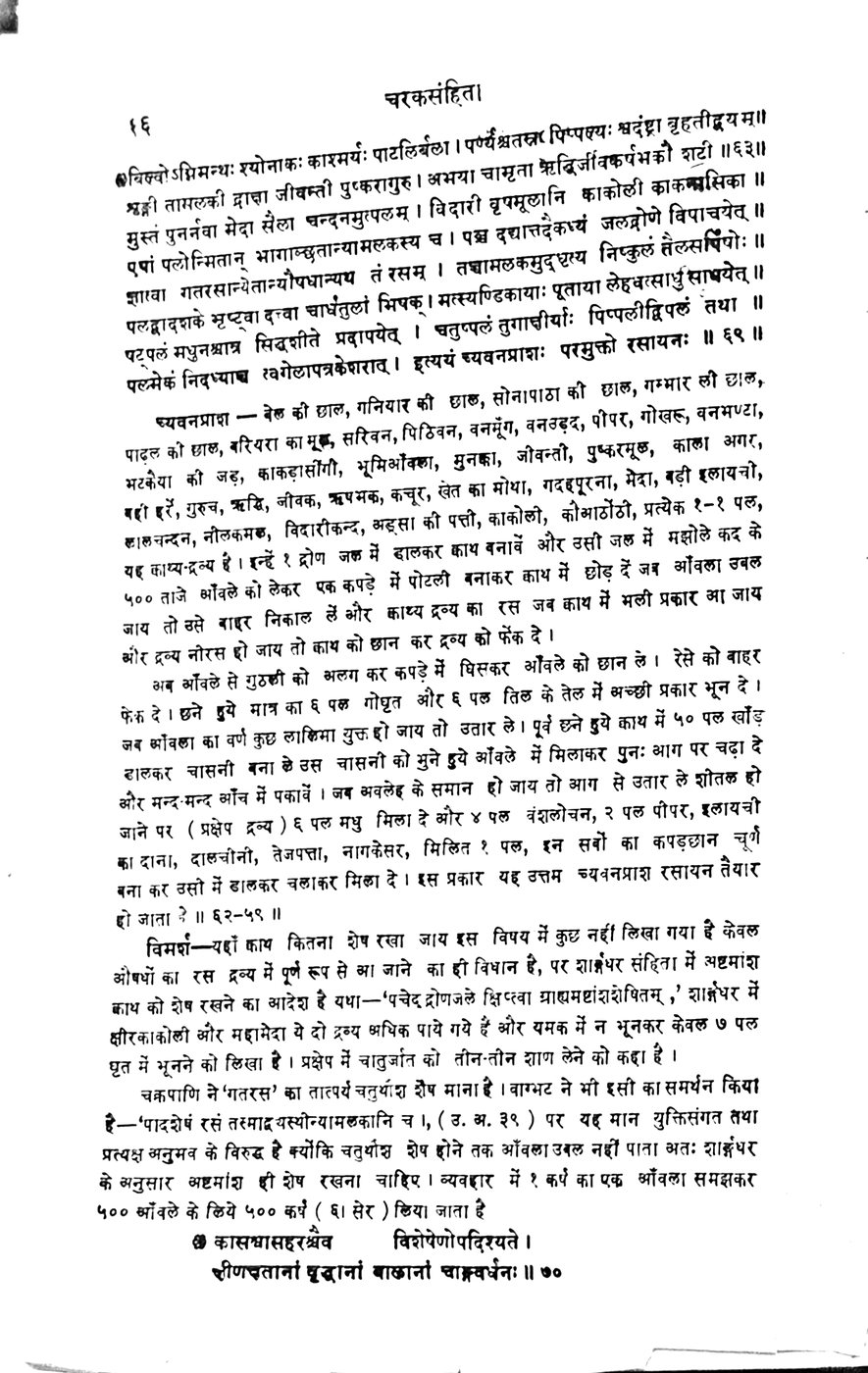
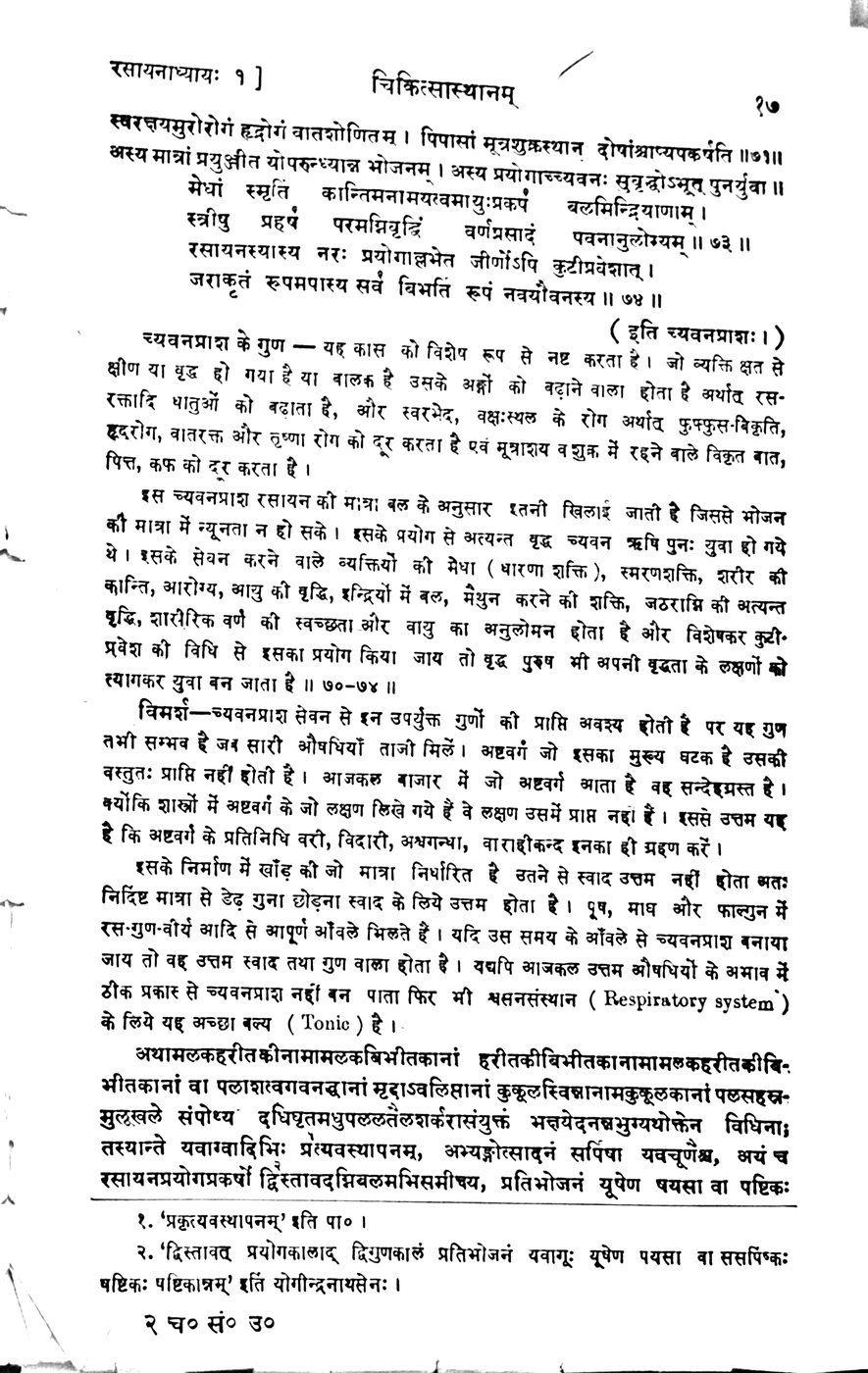
Chyawanprash has retained its identity as a Rasayana formulation for centuries; however, its composition, mode of preparation, and quality-control approaches have evolved substantially over time. Classical Ayurvedic descriptions of Chyavanaprasha Avaleha, documented in texts such as the Charaka Samhita, Ashtanga Hridaya, and later Ayurvedic formularies, provide the foundational framework for the formulation.
Contemporary commercial products, while derived from these classical principles, are manufactured under standardized pharmaceutical processes and quality-assurance systems designed to ensure consistency, safety, stability, and reproducibility.
The classical formulation described in Ayurvedic literature is centered on Amla (Phyllanthus emblica L.) and incorporates a large number of botanicals processed through a multistep manufacturing procedure involving decoctions (kwatha), herbal pastes (kalka), ghee (ghrita), sesame oil (tila taila), sugar, and honey.
Modern formulations continue to preserve the core architecture of the classical preparation but incorporate advances in raw-material authentication, pharmacognostic evaluation, process standardization, quality-control testing, contamination monitoring, phytochemical characterization, and Good Manufacturing Practices (GMP). These measures help achieve batch-to-batch consistency while maintaining adherence to Ayurvedic principles.
Importantly, modern scientific evaluation does not seek to replace the classical formulation concept; rather, it aims to characterize and standardize it using contemporary analytical methods. Thus, modern Chyawanprash can be viewed as an evolution of the classical Rasayana preparation in which traditional knowledge is integrated with pharmaceutical science and evidence-based evaluation.
Relevance to Dabur Chyawanprash
Dabur Chyawanprash represents an example of the translation of a classical Ayurvedic Rasayana into a modern standardized formulation. The product continues to follow the fundamental Ayurvedic framework of a multi-ingredient Amla-based rejuvenative preparation while incorporating contemporary approaches to botanical authentication, quality assurance, manufacturing control, safety assessment, and scientific evaluation.
Consequently, Dabur Chyawanprash occupies a unique position at the interface of traditional Ayurvedic heritage and modern evidence-based research, serving as a model for how classical formulations can be systematically characterized and evaluated without departing from their original Ayurvedic identity.
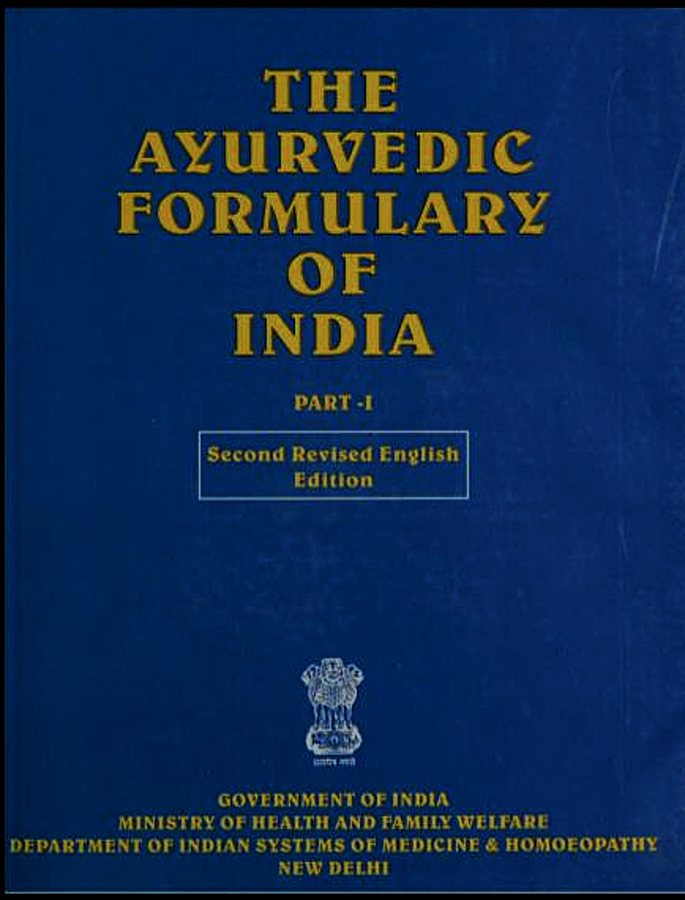
The official monograph
The official monograph for Cyavanaprāśa, as given in The Ayurvedic Formulary of India, Part I, Second Revised English Edition. Ministry of Health and Family Welfare, Department of Indian Systems of Medicine & Homoeopathy, New Delhi.
CARAKA SAṂHITĀ, CIKITSĀSTHĀNA, ADHYĀYA 1(1): 62–69
| # | Ingredient | Part | Qty |
|---|---|---|---|
| 1 | Bilva | Rt./St. Bk. | 48 g |
| 2 | Agnimantha | Rt./St. Bk. | 48 g |
| 3 | Śyonāka | Rt./St. Bk. | 48 g |
| 4 | Kāśmarī (gambhārī) | Rt./St. Bk. | 48 g |
| 5 | Pāṭalā (pāṭalā) | Rt./St. Bk. | 48 g |
| 6 | Balā | Pl. | 48 g |
| 7 | Śālaparṇī | Pl. | 48 g |
| 8 | Pṛśniparṇī | Pl. | 48 g |
| 9 | Mudgaparṇī | Pl. | 48 g |
| 10 | Māṣaparṇī | Pl. | 48 g |
| 11 | Pippalī | Fr. | 48 g |
| 12 | Svadaṃṣṭrā (gokṣura) | Pl. | 48 g |
| 13 | Bṛhatī | Pl. | 48 g |
| 14 | Kaṇṭakārī | Pl. | 48 g |
| 15 | Śṛṅgī (karkaṭaśṛṅgī) | Gl. | 48 g |
| 16 | Tāmalakī | Pl. | 48 g |
| 17 | Drākṣā | Dr. Fr. | 48 g |
| 18 | Jīvantī | Rt. | 48 g |
| 19 | Puṣkara | Rt. | 48 g |
| 20 | Aguru | Ht. Wd. | 48 g |
| 21 | Abhayā (harītakī) | P. | 48 g |
| 22 | Amṛtā (guḍūcī) | St. | 48 g |
| 23 | Ṛddhi | Sub. Rt. Tr. | 48 g |
| 24 | Jīvaka | Rt. Tr. | 48 g |
| 25 | Ṛṣabhaka | Rt. Tr. | 48 g |
| 26 | Śaṭī | Rz. | 48 g |
| 27 | Mustā | Rz. | 48 g |
| 28 | Punarnavā (rakta punarnavā) | Pl. | 48 g |
| 29 | Medā | Rt. Tr. | 48 g |
| 30 | Elā (sūkṣmailā) | Sd. | 48 g |
| 31 | Candana (śveta candana) | Ht. Wd. | 48 g |
| 32 | Utpala | Fl. | 48 g |
| 33 | Vidārī | Rt. Tr. | 48 g |
| 34 | Vṛṣamūla (vāsā) | Rt. | 48 g |
| 35 | Kākolī | Sub. Rt. | 48 g |
| 36 | Kākanāsikā | Fr. | 48 g |
| 37 | Āmalaka (āmalakī) | Fr. | 500 no. |
| 38 | Water for decoction, reduced to 3.072 l | 12.288 l | |
| 39 | Ghṛta | 288 g | |
| 40 | Taila (tila) | Oil | 288 g |
| 41 | Matsyaṇḍikā | 2.400 kg | |
| 42 | Madhu | 288 g | |
| 43 | Tugākṣīrī (vaṃśa) | S.C. | 192 g |
| 44 | Pippalī | Fr. | 96 g |
| 45 | Tvak | St. Bk. | 48 g |
| 46 | Elā (sūkṣmailā) | Sd. | 48 g |
| 47 | Patra (tejapatra) | Lf. | 48 g |
| 48 | Keśara (nāgakeśara) | Stmn. | 48 g |
12 to 24 g
Water, milk
Kāsa, śvāsa, kṣatakṣīṇa, svarabheda, kṣaya, hṛdroga, agnimāndya, uroroga, vātarakta, pipāsā, mūtraroga, śukra doṣa, jarā. Used as a rasāyana, medhya and smṛtiprada.
Ripe fresh āmalakīs are bundled in a piece of cloth. Ingredients 1 to 36 are coarsely powdered and put in a vessel. Water is added and the āmalakī bundle is immersed by suspension in the vessel and boiled till the water is reduced to one fourth. The āmalakī bundle is then removed and the decoction is strained and kept separately. The seeds of the boiled āmalakī are removed and the pulp is made into a paste, which is then strained through a piece of cloth or sieve of 40 mesh over a wide-mouthed vessel. After the fibres are removed, the pulp is fried with ghṛta and taila (ingredients 39 to 40) till the moisture evaporates. Matsyaṇḍikā (śarkarā) (ingredient no. 41) is added to the decoction and boiled to lehya pāka, at which stage the fried pulp is added and boiled again. Fine powders of ingredients 43 to 48 are added to the lehya, stirred well, and allowed to cool, at which stage madhu is added.
The Ayurvedic Formulary of India, Part I, pp. 37–38.
The classical text
Unit Operations in Traditional Chyawanprash Preparation
Traditional Chyawanprash (Chyavanaprasha Avaleha) is prepared through a sequence of pharmaceutical operations that transform multiple botanical ingredients into a stable semisolid formulation.
Figure. Traditional unit operations involved in the preparation of Chyawanprash, including herbal decoction preparation, Amla processing, lipid incorporation, concentration, homogenization, addition of honey and aromatic ingredients, and final packaging.
- Raw Material SelectionCollection and authentication of Amla, medicinal herbs, spices, honey, ghee, and sesame oil.
- Preparation of Herbal Decoction (Kwatha)Selected herbs are boiled in water to extract water-soluble constituents.
- Amla ProcessingFresh Amla fruits are boiled, deseeded, and converted into pulp.
- Preparation of Herbal Paste (Kalka/Pishti)Fine powders of selected herbs are made into a paste.
- Frying of Amla PulpAmla pulp is cooked in ghee (Ghrita) and sesame oil (Tila Taila).
- Concentration of DecoctionThe herbal decoction is concentrated with sugar syrup to the desired consistency.
- Mixing and HomogenizationAmla pulp, concentrated decoction, and herbal paste are blended uniformly.
- Addition of Honey and Aromatic IngredientsHeat-sensitive ingredients are added after partial cooling.
- Cooling and PackagingThe finished Chyawanprash is cooled and packed in airtight containers.