Dabur Research Foundation Chyawanprash DecodedPreclinical and Clinical Science Legacy of science
since 1884
Home
Chyawanprash Decoded

Heritage, History and Ayurvedic Foundation


The scientific journey of Dabur Chyawanprash represents a continuum from classical Ayurvedic knowledge to modern evidence generation.

In this section

01
Product Heritage

History and Origin of Chyawanprash

Chyawanprash is one of the best-known classical polyherbal formulations of Ayurveda and is traditionally associated with Rasayana therapy, the Ayurvedic approach to rejuvenation, vitality, healthy ageing, and maintenance of physiological resilience. Its origin is associated with the legendary sage Chyawan (Chyavana Rishi) and the celestial physicians, the Ashwini Kumaras (Ashvins).

According to traditional Ayurvedic accounts, the Ashwini Kumaras prepared a rejuvenating herbal formulation for the aged sage Chyawan to restore his youthfulness, strength, and vitality. The preparation subsequently became known as Chyawanprash, deriving its name from the sage.

The Chyawanprash tradition is represented in classical Ayurvedic literature and is also associated with later Indian literary and sacred traditions. Traditional accounts further associate the hermitage of Chyawan Rishi with Dhosi Hill, near Narnaul in present-day Haryana, India. While these accounts form an important part of the cultural and traditional heritage of Chyawanprash, the historical narrative should be distinguished from the textual evidence provided by classical Ayurvedic treatises.

Painting of Sage Chyawan seated in meditation, in saffron robes
Sage Chyawan (Chyavana Rishi), for whom the formulation was traditionally prepared by the Ashwini Kumaras.

The name

The name Chyawanprash is traditionally understood through the terms Chyawan and Prasha.

Part oneChyawan

refers to the sage Chyawan and is also associated in traditional interpretations with age-related decline

Part twoPrasha

refers to a preparation suitable for consumption

Together, the name reflects the formulation’s traditional association with rejuvenation and restoration of vitality.

Historical References in Ayurvedic Literature

The Charaka Samhita contains a prominent classical description of Chyavanaprasha Avaleha within the context of Rasayana therapy. The formulation is described as a rejuvenative preparation associated with restoration of strength, vitality, complexion, intellect, and healthy longevity.

The classical Ayurvedic foundation of Chyawanprash is primarily associated with the description of Chyavanaprasha Avaleha in the Charaka Samhita, where it is presented within the broader framework of Rasayana therapy. The formulation combines Amla with a large number of medicinal botanicals and other natural ingredients and exemplifies the Ayurvedic practice of developing complex formulations from multiple herbs.

The classical literature therefore provides an important historical and conceptual foundation for Chyawanprash, while the specific composition and manufacturing practices of contemporary commercial products may differ from individual classical recipes.

  1. 01

    Charaka Samhita

    Prominent classical description of Chyavanaprasha Avaleha within the context of Rasayana therapy.

  2. 02

    Ashtanga Hridaya

    Subsequent Ayurvedic literature further contributed to the development and transmission of Chyawanprash and related Avaleha preparations.

  3. 03

    Sharangadhara Samhita

    Texts such as the Ashtanga Hridaya and Sharangadhara Samhita provide additional descriptions of Rasayana formulations and Ayurvedic pharmaceutical processes, contributing to the continuity and refinement of such preparations across generations.

Evolution of Chyawanprash Across Centuries

Physician-prepared formulations

Chyawanprash has undergone substantial evolution over the centuries while retaining its identity as a Rasayana-oriented polyherbal formulation. Traditionally, such preparations were compounded by Ayurvedic physicians using decoctions, herbal powders, extracts, and natural ingredients according to established pharmaceutical principles.

Organized Ayurvedic manufacturing

The transition from physician-prepared formulations to organized Ayurvedic manufacturing during the twentieth century enabled larger-scale production, improved process control, standardized packaging, quality assurance, and wider consumer access. This transformation allowed Chyawanprash to evolve from a traditionally prepared Rasayana formulation into a widely available household health product.

Evolution into Modern Commercial Products

The development of the organized Ayurvedic pharmaceutical industry introduced modern approaches to botanical authentication, raw-material testing, process control, quality assurance, stability, packaging, and manufacturing consistency. These advances enabled Chyawanprash to be produced at scale while retaining its fundamental Ayurvedic formulation principles.

The formulation is characterized by a diverse botanical composition. Classical Chyawanprash preparations are centered on Amla (Phyllanthus emblica L.) and incorporate numerous medicinal herbs, spices, and other natural substances. Different plant parts, including fruits, roots, stems, bark, leaves, flowers, rhizomes, tubers, and whole plants, may contribute to the overall formulation.

Plant parts that may contribute

  • Fruits
  • Roots
  • Stems
  • Bark
  • Leaves
  • Flowers
  • Rhizomes
  • Tubers
  • Whole plants

At the same time, scientific research on traditional medicines created opportunities to investigate Chyawanprash using contemporary methodologies. These include phytochemical characterization, analytical standardization, toxicological assessment, pharmacological screening, mechanistic studies, and clinical evaluation.

Consequently, contemporary Chyawanprash occupies an intersection between traditional Ayurvedic knowledge and modern nutritional, pharmacological, and biomedical research. The evolution reflects a progressive transition from traditional empirical use toward quality-controlled, scientifically characterized and experimentally evaluated polyherbal formulations.

02
Ayurvedic Conceptual Foundation

Rasayana Concept

Part oneRasa

referring to the nourishing essence or nutrient component

Part twoAyana

referring to a pathway or movement

Rasayana represents a specialized therapeutic and preventive approach in Ayurveda concerned with rejuvenation, healthy ageing, nourishment, vitality, and maintenance of physiological resilience.

Classical Ayurvedic descriptions associate Chyawanprash and related Rasayana preparations with several traditional objectives, including:

  • Ayushyapromotion of longevity
  • Balyasupport of strength and vitality
  • Rasayanarejuvenation and healthy ageing
  • Medhyasupport of intellect and cognitive function
  • Agnideepanasupport of digestive function
  • Kasaharatraditional support for respiratory health
  • Vrishyasupport of reproductive vitality
  • Varnyasupport of complexion and vitality
  • Vyadhikshamatvasupport of disease resistance

NoteThese represent traditional Ayurvedic indications and concepts and should not automatically be interpreted as established clinical claims. Contemporary research is required to determine the extent to which individual traditional indications are supported by modern scientific evidence.

Within the Ayurvedic framework, Rasayana is not directed exclusively toward the treatment of a single disease. Rather, it is concerned with maintaining physiological equilibrium, supporting tissue nourishment, preserving vitality, and enhancing the body’s ability to adapt to internal and external challenges.

From a contemporary research perspective, these traditional concepts can provide a framework for investigating multiple biological domains, including oxidative stress, immune regulation, metabolic function, tissue maintenance, and healthy ageing. Such biomedical interpretations should, however, be distinguished from the original Ayurvedic concepts.

Concept of Ojas

Ojas is a fundamental Ayurvedic concept associated with vitality, strength, resilience, and the maintenance of physiological integrity. Classical Ayurvedic descriptions associate Ojas with the strength and functional integrity of the organism.

Ojas is traditionally associated with:

  • Physical strength and vitality
  • Resistance to disease
  • Endurance and resilience
  • Maintenance of physiological harmony
  • Overall wellbeing

Ojas does not have a direct anatomical or molecular equivalent in modern biomedical science. In contemporary scientific discussions, it may be used as a conceptual analogy for integrated physiological resilience, encompassing multiple interacting systems involved in immune competence, metabolic homeostasis, nutritional status, and stress adaptation.

Accordingly, the traditional characterization of Chyawanprash as a Rasayana may be understood within this broader Ayurvedic framework of maintaining vitality and resilience.

Vyadhikshamatva

Vyadhikshamatva broadly refers to the body’s capacity to resist disease and maintain health. Classical Ayurvedic thought describes this concept in relation to the ability to resist the development or progression of disease and to prevent disease occurrence.

Vyadhikshamatva is considered to depend on the integrated functioning of multiple factors, including Agni, Dhatu Poshana, Ojas, physical strength, mental wellbeing, and adaptation to environmental influences.

  • Agni
  • Dhatu Poshana
  • Ojas
  • Physical strength
  • Mental wellbeing
  • Adaptation to environmental influences

Although Vyadhikshamatva should not be equated directly with the modern immunological concept of immunity, the concept provides a traditional framework for understanding host resilience and disease resistance.

Chyawanprash, as a Rasayana formulation, has traditionally been associated with supporting Vyadhikshamatva. Contemporary research can investigate this traditional concept through measurable endpoints related to immune function, inflammatory regulation, oxidative stress, nutritional status, and physiological resilience.

Dhatu Poshana

Ayurveda describes seven fundamental body tissues, or Sapta Dhatus:

  1. 01Rasanourishing fluid and nutrient component
  2. 02Raktablood
  3. 03Mamsamuscle tissue
  4. 04Medaadipose tissue
  5. 05Asthibone tissue
  6. 06Majjamarrow and associated nervous tissue
  7. 07Shukrareproductive tissue

According to Ayurvedic physiology, appropriate nourishment of these tissues depends on effective digestion and metabolism, represented by Agni, together with appropriate nutrient assimilation and tissue transformation.

Dhatu Poshana, or tissue nourishment, therefore represents the traditional concept of maintaining the quality and functional integrity of body tissues. Rasayana formulations are traditionally considered to support this process and thereby contribute to strength, vitality, tissue maintenance, and healthy ageing.

The combination of diverse botanicals with natural ingredients such as honey and ghee contributes to the traditional characterization of Chyawanprash as a nourishing Rasayana formulation.

Agni and Metabolic Function

Agni, traditionally described as the digestive and metabolic principle, occupies a central position in Ayurvedic physiology. Proper Agni is considered important for digestion, nutrient assimilation, tissue nourishment, and maintenance of physiological equilibrium.

Impaired Agni, or Mandagni, is traditionally associated with inadequate digestion and the accumulation of incompletely processed metabolic material, described as Ama.

In the context of Chyawanprash, the traditional association with digestive and metabolic wellbeing provides a conceptual basis for investigating its effects on digestion, nutrient utilization, metabolic pathways, and gut-associated physiological functions using contemporary scientific approaches.

Ageing and Rejuvenation

Ageing, or Jara, is recognized in Ayurveda as a natural process associated with progressive changes in strength, tissue integrity, vitality, and physiological function.

The Ayurvedic concept of accelerated ageing is associated with factors including impaired digestion and metabolism, inadequate tissue nourishment, depletion of Ojas, and progressive tissue deterioration.

Rasayana therapy is traditionally intended to support healthy ageing by promoting nourishment, maintaining vitality, preserving tissue integrity, and sustaining physiological resilience.

Chyawanprash therefore occupies a prominent position within the traditional Ayurvedic framework of rejuvenation and healthy ageing.

Prevention and Health Promotion

A central principle of Ayurveda is the preservation of health and prevention of disease. Within this framework, Rasayana approaches may be used to support individuals in maintaining physiological balance and resilience rather than being limited to disease treatment.

Classical Concepts and Contemporary Biomedical Interpretation

Traditional objectives include:

  1. Maintaining physiological balance
  2. Supporting natural disease resistance
  3. Supporting adaptation to environmental and seasonal changes
  4. Maintaining vitality and strength
  5. Promoting healthy ageing
  6. Supporting overall physical and mental wellbeing

This preventive orientation has contributed to the widespread traditional use of Chyawanprash as a daily health-supporting formulation.

Ayurvedic conceptTraditional descriptionContemporary research perspective*
RasayanaRejuvenation, vitality and healthy ageingHealthy ageing, stress resilience and multi-system biological support
OjasVital essence associated with strength and resilienceIntegrated physiological resilience and homeostasis
VyadhikshamatvaCapacity to resist diseaseHost defence and immune-related function
Dhatu PoshanaNourishment and maintenance of body tissuesNutritional status, tissue maintenance and repair
AgniDigestive and metabolic principleDigestion, metabolism and nutrient assimilation
VayasthapanaPreservation of youthful characteristicsHealthy ageing and maintenance of physiological function

Formulation Architecture

Principal botanical

Amla

Phyllanthus emblica L.

Herbs, spices and natural ingredients

Diverse phytochemical profiles

Herbal powders, decoctions, extracts, spices, and natural ingredients

Sneha dravyas

Ghrita and Tila Taila

Ghee and sesame oil

Chyawanprash represents a multi-herbal formulation architecture in which different botanical entities and plant parts are combined with spices and natural ingredients. The formulation may incorporate fruits, roots, stems, bark, leaves, flowers, rhizomes, tubers, and whole plants, thereby bringing together diverse phytochemical profiles within a single preparation.

Classical and contemporary formulations may contain herbal powders, decoctions, extracts, spices, and natural ingredients. Amla (Phyllanthus emblica L.) serves as a principal botanical in Chyawanprash, while other herbs contribute their characteristic Ayurvedic properties and phytochemical constituents.

The inclusion of Ghrita (ghee) and Tila Taila (sesame oil) represents the traditional use of Sneha dravyas within the formulation. These lipid-based ingredients contribute to the physical characteristics and integration of the formulation and form part of the traditional pharmaceutical approach to preparing Chyawanprash.

The resulting formulation is therefore fundamentally different from a single-ingredient botanical intervention. Its biological profile is potentially influenced by the combined composition, processing, relative abundance of constituents, and interactions among multiple botanical ingredients.

This multi-component architecture provides a rationale for evaluating Chyawanprash using integrated scientific approaches rather than relying exclusively on the activity of individual ingredients.

03
Transition

Transition from Ayurvedic Knowledge to Modern Scientific Evaluation

The long history of Chyawanprash provides a foundation for contemporary scientific investigation, but traditional use and modern evidence represent complementary yet distinct forms of knowledge. Modern research can systematically evaluate the formulation through chemical characterization, quality standardization, safety assessment, pharmacological screening, mechanistic studies, omics-based profiling, and clinical investigation.

  • Chemical characterization
  • Quality standardization
  • Safety assessment
  • Pharmacological screening
  • Mechanistic studies
  • Omics-based profiling
  • Clinical investigation

This approach enables the traditional Rasayana framework to be investigated through measurable biological endpoints while preserving the holistic nature of the original formulation.

For Dabur Chyawanprash, this transition has been further supported by structured research programmes undertaken through Dabur Research & Development Centre (DRDC) and collaborative preclinical research with Althea DRF Life Sciences. Such investigations provide an opportunity to characterize the formulation at multiple levels, from composition and safety to biological activity and potential mechanisms of action, thereby creating a bridge between Ayurvedic heritage and contemporary evidence-based science.

A bridge between Ayurvedic heritage and contemporary evidence-based science.

04
Legacy, Standardization and Scientific Validation of Dabur Chyawanprash

Legacy of Dabur Chyawanprash

1949

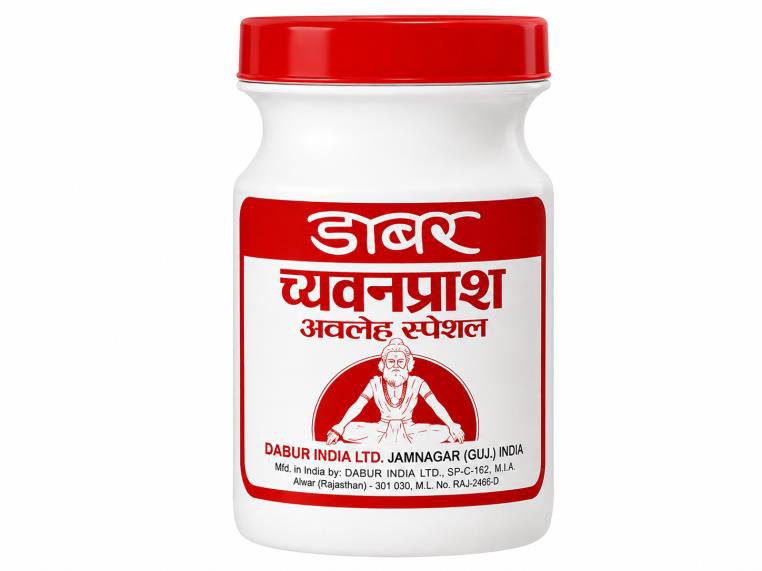
In 1949, Dabur introduced Chyawanprash as a packaged and branded Ayurvedic health product, bringing a traditional Rasayana formulation into modern Indian households. While the origins of Chyawanprash are rooted in classical Ayurvedic tradition, Dabur recognized the potential of the formulation to be developed into a consistent, accessible, and quality-controlled commercial preparation.

Vintage white Dabur Chyawanprash Avaleh Special jar with red label
Vintage Dabur Chyawanprash packing, from the introduction of the branded product in 1949.

Dabur’s Contribution to Standardization

Although numerous Chyawanprash formulations are commercially available, Dabur Chyawanprash has established a distinctive position through its long-standing manufacturing heritage and emphasis on standardization, quality control, and scientific evaluation.

Establishment of a Scientific Research Programme

Over the decades, Dabur Chyawanprash (DCP) has retained the fundamental principles of the classical formulation while incorporating contemporary approaches to manufacturing, quality assurance, and scientific evaluation.

~45The formulation contains approximately 45 Ayurvedic ingredients, with Amla (Phyllanthus emblica L.) as the principal botanical ingredient, together with a diverse combination of herbs, spices, and other natural ingredients.

The formulation represents a complex botanical matrix in which multiple plant-derived ingredients contribute distinct phytochemical profiles and traditionally recognized Ayurvedic properties. Careful selection and authentication of raw materials, controlled processing, standardized manufacturing practices, and stringent quality-control measures are applied to promote batch-to-batch consistency, product quality, safety, and reproducibility.

The transition from traditionally prepared Chyawanprash to a large-scale commercial formulation requires control at multiple stages, including:

  1. Authentication and quality assessment of botanical raw materials
  2. Control of ingredient identity and specifications
  3. Standardized processing and manufacturing conditions
  4. Quality-control testing of the finished formulation
  5. Monitoring of product consistency and stability
  6. Application of appropriate safety and quality-assurance systems

These measures provide a framework for maintaining the consistency of a complex polyherbal formulation across manufacturing batches while preserving its essential Ayurvedic formulation principles.

Heritage and Foundation

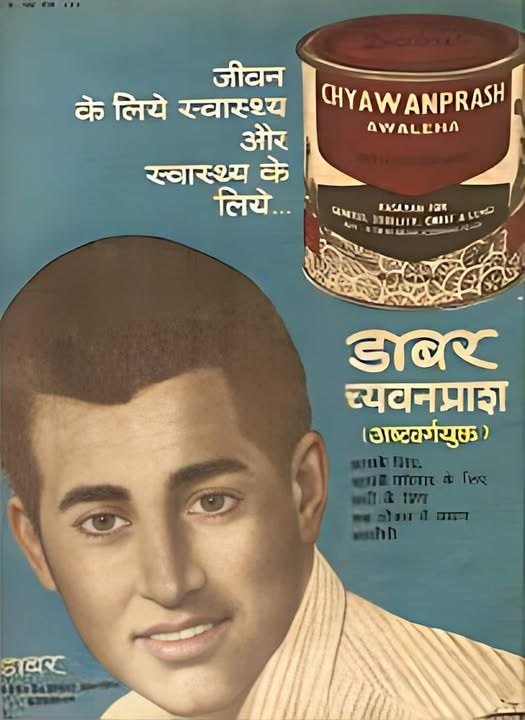
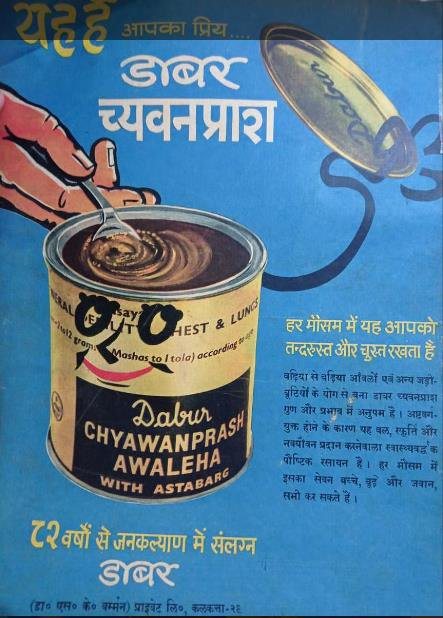
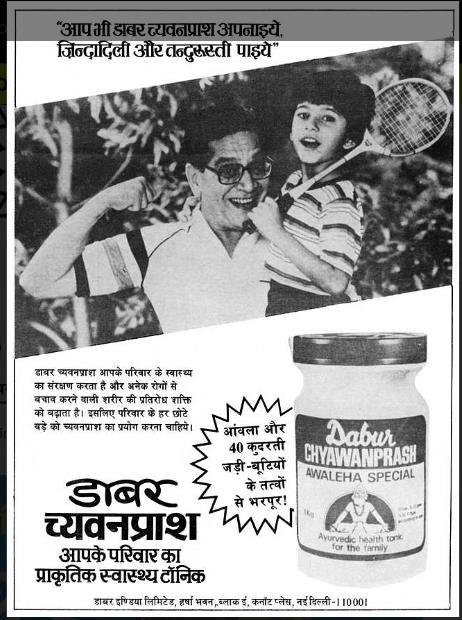
A century of Dabur Chyawanprash in public life

Vintage Dabur Chyawanprash advertisement with a young man and an Awaleha tin
01
Vintage blue Dabur Chyawanprash Awaleha tin advertisement
02
Black and white Dabur Chyawanprash family advertisement
03
Dabur Chyawanprash Brand Saga campaign
04
Dabur Chyawanprash Taiyaar ya Beemaar campaign still
05 2020s · “Taiyaar ya Beemaar?”

Scroll sideways through the archive

Recognizing the importance of generating scientific evidence for traditional medicines, Dabur established the Dabur Research & Development Centre (DRDC) to undertake systematic research on the safety, pharmacological properties, mechanisms of action, and potential health benefits of its products, including Dabur Chyawanprash.

The scientific evaluation of DCP has progressively expanded from traditional knowledge and formulation-based rationale to investigations using modern pharmacological, toxicological, cellular, animal, mechanistic, and clinical approaches.

A component of this research programme has included preclinical investigations conducted in collaboration with Althea DRF Life Sciences, leveraging expertise in experimental pharmacology and biological evaluation. These collaborative studies have enabled the assessment of DCP using defined experimental models, measurable biological endpoints, and mechanistic investigations.

Preclinical investigations have included evaluation of the tolerability and safety of DCP in acute and repeated-dose studies. Additional experimental studies have investigated immune-related biological responses, including parameters associated with macrophage phagocytic activity, natural killer (NK) cell function, dendritic-cell maturation, and inflammatory mediators.

These investigations provide mechanistic evidence that can be considered alongside the traditional Ayurvedic concepts of Vyadhikshamatva, Ojas, and Rasayana, while recognizing that these traditional concepts do not have direct one-to-one equivalents in modern biomedical science.

Clinical Evaluation

The preclinical research programme has been complemented by clinical investigations evaluating Dabur Chyawanprash in different population groups and health contexts. Studies have included healthy individuals as well as populations investigated in relation to recurrent respiratory infections, allergic conditions, and seasonal health challenges.

The overall objective has been to build a structured evidence base for understanding the safety, biological activity, and potential mechanisms associated with a complex multi-ingredient Rasayana formulation.

Depending on the study design, clinical investigations have evaluated both clinical outcomes and objective biological parameters. These have included immunoglobulins such as IgE and IgG, complement components including C3 and C4, haematological parameters, respiratory measures, and health-related quality-of-life outcomes.

  • IgE
  • IgG
  • C3
  • C4
  • Haematological parameters
  • Respiratory measures
  • Health-related quality of life

The integration of clinical outcomes with measurable biological biomarkers provides a more comprehensive approach to evaluating a complex polyherbal formulation and allows traditional indications to be examined using contemporary clinical research methodologies.


Integrated Scientific Evaluation Framework

The scientific evaluation of Dabur Chyawanprash has progressively adopted a multi-dimensional research framework, reflecting the multi-component and multi-target nature of the formulation. The research strategy combines:

  1. 01Formulation
  2. 02Safety
  3. 03Functional efficacy
  4. 04Mechanistic investigation
  5. 05Pathway characterization
  6. 06Clinical evaluation

Within this framework, validated cellular, biochemical, and animal models have been employed to investigate biological domains relevant to the traditional Rasayana positioning of DCP. These domains include:

  • Immunomodulation
  • Antioxidant and oxidative-stress pathways
  • Inflammation
  • Allergy-related responses
  • Respiratory health
  • Hepatoprotective activity
  • Energy and stamina
  • Muscle function
  • Cardiovascular health
  • Neuronal and cognitive health
  • Bone health
  • Cellular vitality
  • Healthy ageing

Mechanistic investigations further enable the biological responses observed with DCP to be connected with cellular pathways, molecular targets, biomarkers, and physiological endpoints.

This integrated strategy is particularly relevant to a polyherbal formulation because its biological activity is unlikely to be adequately represented by a single molecular target or isolated constituent. Instead, the scientific evaluation seeks to characterize the multi-component, multi-pathway nature of the formulation.

Seven stages · one continuum

From Traditional Rasayana to Evidence-Based Science

The scientific journey of Dabur Chyawanprash represents a continuum from classical Ayurvedic knowledge to modern evidence generation. Each stage below inherits the one before it; nothing is displaced.

Through this approach, Dabur Chyawanprash can be investigated not simply as a collection of individual herbs, but as a standardized, multi-component Ayurvedic formulation with a broad biological profile.

The collaborative research undertaken through DRDC and DRF provides an important bridge between traditional Ayurvedic concepts and contemporary experimental science, creating a framework for systematic investigation of the formulation’s safety, biological activity, mechanisms of action, and potential relevance to health and wellbeing.

  1. 01
    Ayurvedic heritageClassical knowledge, transmitted through the Rasayana tradition
  2. 02
    Classical Rasayana formulationAmla-centred polyherbal composition described in classical texts
  3. 03
    Standardized manufacturing and quality controlBotanical authentication, controlled processing, batch consistency
  4. 04
    Preclinical safety and efficacy evaluationAcute and repeated-dose safety, functional biological activity
  5. 05
    Mechanistic and pathway investigationsCellular pathways, molecular targets and biomarkers
  6. 06
    Clinical evaluation and biomarker assessmentHuman outcomes read alongside objective biological parameters
  7. 07
    Integrated scientific understandingA standardized, multi-component formulation with a broad biological profile